Phase 1 communications relay testbed , where Earth never rises
Far Side of the Moon
Phase 1 , Artemis IV Landing (2028)
First crewed lunar landing since Apollo 17. Initial surface operations at the south pole following Artemis IV, with early robotic infrastructure and technology demonstrations.
Real places · Official mission archives
Landmarks & Mission History
About this Site
The far side of the Moon is the ultimate frontier. Earth never appears above the horizon , you are truly alone. Instead of the smooth mare plains of the near side, the far side is ancient rugged highlands, 4 billion years old, covered in craters upon craters. Complete radio silence from Earth makes it the best place in the solar system for radio astronomy. In 2024, China and the ILEC deployed 3 Optimus Explorers to begin scouting sites for the Far Side Radio Observatory , a telescope that could detect signals from the cosmic dark ages, the era before the first stars formed.
What You'll See
Site Conditions
Terrain
Ancient highlands, overlapping craters, no mare plains
Temperature
-180°C to 105°C
Sunlight
Full 14.5-day cycle, no earthlight
Established
August 2024
Coordinates
6.00°N, 180.00°E
Ready to explore?
Rent an Explorer , $500/hrLive Activity at Far Side of the Moon
Radio telescope site evaluation , Grid 3
Highland terrain mapping , autonomous assist
Rent an Explorer
Choose an Optimus Explorer to control at Far Side of the Moon
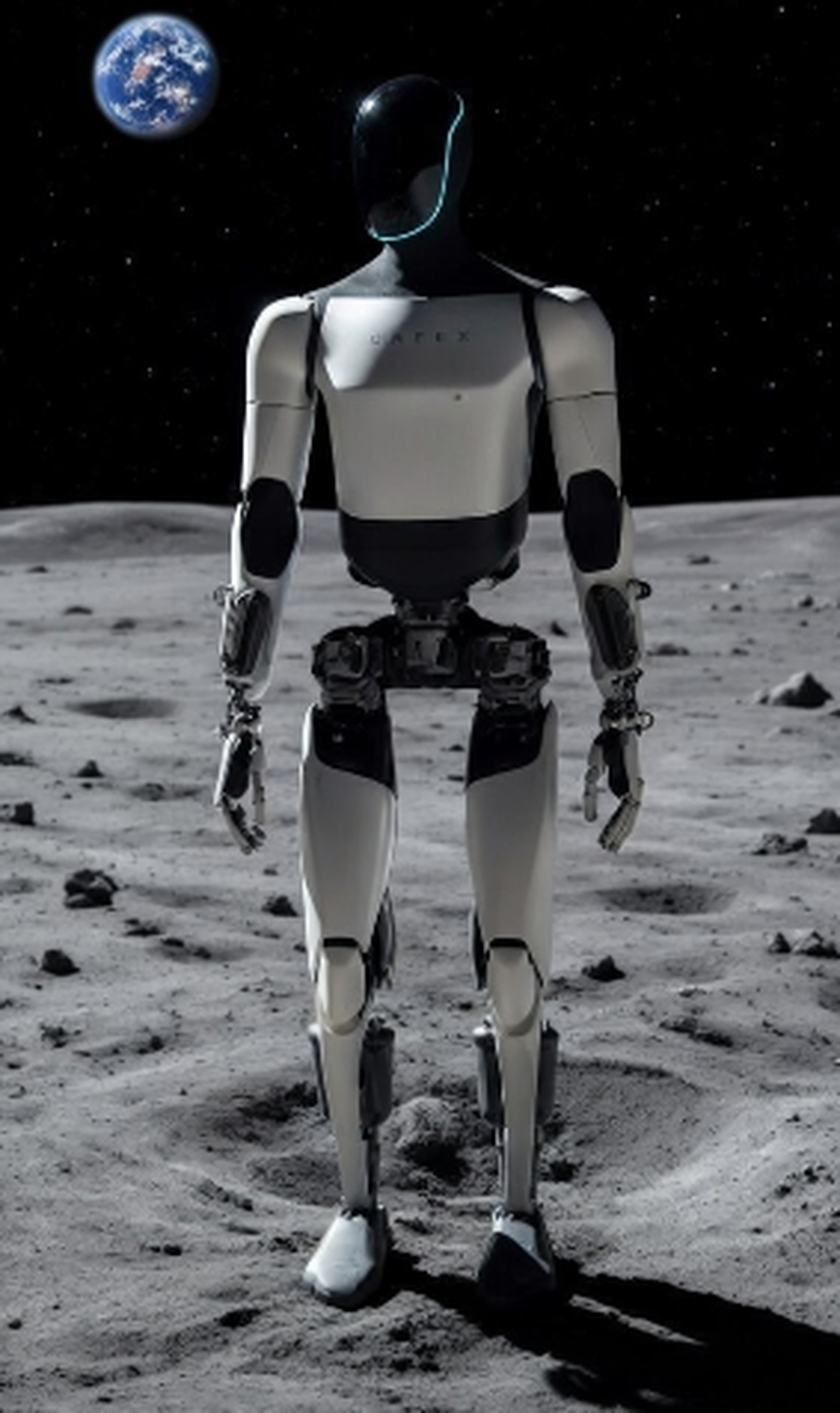
Deep Space Observer
Optimus Explorer Astro
Battery
88%
Rate
$500/hr
Missions
89
Uptime
95.2%
Communicates via relay satellite , 4-second signal delay (vs. 1.3s on near side)
Available Missions
3 jobs (2 from Earth), 1 tours, 3 activities
Paid Jobs
3Radio Telescope Site Survey , Grid 3
Expert6 hours · 1 applicant this week
The Far Side Radio Observatory needs flat, stable terrain for a 500-meter radio dish. Survey Grid 3 , a 2 km × 2 km area , for surface flatness, rock density, and regolith depth. Use the ground-penetrating radar to check for subsurface voids. The Explorer communicates via relay satellite, so expect a 4-second round-trip delay instead of the usual 1.3 seconds. This means you need to think further ahead when driving. It's like driving on ice , commit to your moves early.
$350
you earn
+$200 bonus
Requirements
- →Expert certification
- →Ability to work with 4-second delay
- →6-hour continuous session
Deliverables
- ✓Terrain flatness map
- ✓Rock density survey
- ✓Subsurface radar profile
- ✓Site suitability report
Translator , Mission Communications (Mandarin/English)
MediumWork from Earth4 hours · 34 applicants this week
The far side of the Moon hosts equipment from both NASA and CNSA (China National Space Administration), and operators come from dozens of countries. Mission briefs, safety warnings, equipment manuals, and operator instructions need to flow between Mandarin and English accurately and quickly. Robots can run basic machine translation, but nuance matters when lives and expensive equipment are on the line , 'caution: unstable regolith ahead' translated slightly wrong could be dangerous. You'll translate documents in both directions, with emphasis on clarity and safety-critical accuracy. Native or near-native fluency in both languages required.
$130
you earn
Requirements
- →Native/near-native Mandarin and English
- →Technical translation samples
- →5-10 documents per session
Deliverables
- ✓Translated documents
- ✓Terminology glossary updates
- ✓Flagged ambiguities for review
Astrophotography Coach , Dark Side Sessions
EasyWork from Earth2 hours · 123 applicants this week
The far side offers the best astrophotography conditions in the solar system , zero light pollution, no atmosphere, and no Earthshine. But most tourists don't know how to use the Explorer's camera settings to capture the Milky Way properly. As an astrophotography coach, you join their session via voice chat and walk them through exposure settings, ISO adjustments, composition framing, and timing. Help them get shots they'll treasure forever. You don't need to be a professional photographer , just someone who understands basic astrophotography and can explain it simply. We provide a cheat sheet for the Explorer's camera system.
$70
you earn
Requirements
- →Basic astrophotography knowledge
- →Microphone required
- →Complete camera system tutorial (30 min)
Deliverables
- ✓Live coaching session
- ✓Post-session satisfaction rating
Sightseeing Tours
1The Dark Side Experience
Medium3 hours · 67 bookings this week
On the far side of the Moon, Earth never rises. You are more isolated than any human has ever been (except the Apollo astronauts who orbited behind it). Your Explorer drives through the ancient cratered highlands , terrain that hasn't changed in 4 billion years. There's a profound stillness here. No Earthlight, no radio noise, nothing but ancient rock and stars. The sky is darker than anywhere on the near side because there's no earthshine. Look up and see the Milky Way blazing with a clarity impossible from Earth. This tour is about the feeling of true cosmic solitude.
$140
per person
What's Included
- →Guided route through ancient highlands
- →4-second delay (Explorer assists navigation)
- →Starfield photography included
What You Get
- ✓Deep sky astrophotography set
- ✓All video footage
- ✓Certificate of far-side visit
Activities
3Astrophotography , Milky Way Session
Medium4 hours · 45 bookings this week
The far side of the Moon during lunar night is the darkest accessible place in the solar system. No atmosphere to scatter light, no earthshine, no city lights for 384,000 km. The Explorer's specialized astrophotography rig captures the Milky Way, nebulae, and deep-sky objects with a clarity impossible from anywhere on Earth's surface. Control the camera, choose your targets, adjust exposure and tracking. The results are stunning , professional-quality astrophotography without a telescope, without a mount, without fighting weather. Just you, an Explorer, and the raw universe.
$160
per person
What's Included
- →Lunar night scheduling required
- →Tracking mount on Explorer
- →Target catalog provided
What You Get
- ✓All astrophotography images (RAW + processed)
- ✓Target identification guide
Lunar Meditation & Solitude Session
Easy1 hour · 234 bookings this week
This isn't a typical activity , it's an experience of pure, unprecedented solitude. Your Explorer parks at a scenic overlook on the far side. The cameras point at the stars. You sit in silence (or with optional ambient audio) and simply exist on the far side of the Moon, 384,000 km from the nearest human, with no Earth in the sky. Many customers describe it as the most meditative, perspective-shifting experience of their lives. Optional guided meditation audio is available. Some customers book this for reflection, journaling, or simply to feel the scale of the universe. Quiet. Dark. Infinite.
$40
per person
What's Included
- →Stationary Explorer , no driving required
- →Optional guided meditation audio
- →Star camera feed
What You Get
- ✓Star-field time-lapse from your session
- ✓Session recording (if desired)
Lunar Highland Rally , Endurance Cross-Country
Expert3 hours · 34 bookings this week
The far side's ancient highlands are the roughest terrain on the Moon , overlapping craters, steep ridges, boulder fields, and no flat ground anywhere. A 20 km rally course has been marked through this chaos. Unlike the smooth driving at other sites, this is pure off-road survival. Navigate crater rims, thread between boulders, climb ridges, and descend into craters. The 4-second signal delay makes it even harder , you're essentially driving 4 seconds in the future. The course is punishing, and completion alone is an achievement. Time-based scoring with penalty zones. Less than 40% of attempts finish the full course. The ultimate test of lunar driving skill.
$80
per person
What's Included
- →20 km highland course
- →4-second signal delay
- →Completion rate: ~40%
What You Get
- ✓Full rally video
- ✓Course completion certificate (if finished)
- ✓Time and leaderboard ranking